
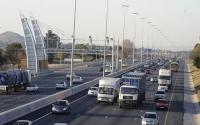
 Sanral CEO Nazir Alli told Parliament’s transport committee last week that the agency was studying the feasibility of building new toll roads on the stretch of the N3 between Durban and Pietermaritzburg, on the N12 from Kimberley to Johannesburg, the N1 ring road at Musina, on the N1 between Kroonstad and Winburg, and on the N1 Botlokwa Interchange in Limpopo. The Eastern Cape has previously been earmarked for a new toll road.
Mr Alli said the agency was increasingly being forced to look at implementing tolls as it did not have sufficient funds to upgrade and maintain national roads, for which it was responsible.
During the same meeting, Deputy Transport Minister Sindi Chikunga said the government was determined to go ahead with the implementation of e-tolls in Gauteng in July.
However, the enabling legislation, the Transport Laws and Related Matters Amendment Bill, still has to be passed through Parliament’s upper house, the National Council of Provinces.
"We are going ahead with e-tolling in July this year. We have had tolling in South Africa since 1983," Ms Chikunga told the committee. Her remarks were greeted with shouts of "viva e-tolls" from African National Congress MPs Dorries Dlakude and Nomakhaya Mdaka.
Democratic Alliance MP Ian Ollis said if the fuel levy imposed on the petrol price had been used to maintain and build roads then the tolls would be unnecessary. "For the past 19 years the fuel levy has been for a lot of other things and not on road maintenance."
Ms Dlakude and Ms Mdaka, however, argued that rural people should not pay for Gauteng roads through the levy.
The fuel levy was first introduced in 1988 to tax the taxi industry and was portrayed as a road maintenance fund. However, its proceeds have always gone into the general revenue pool.
The fuel levy is 29.6c /l on 93-octane petrol and 30.3c /l on diesel. The Treasury has forecast it will generate R46bn this year.
