
African fund raises $320m for infrastructure

African Infrastructure Investment Fund 2 has announced its first close with unconditional commitments totalling $320m.
Construction sector in doldrums over delayed projects

INFRASTRUCTURE development bottlenecks are weighing heavily on SA’s construction companies.
 Construction companies are taking advantage of the surge in infrastructure spending in developing countries around the world.
But the pace of infrastructure development in SA, despite government’s commitment to spend R845-billion in the next few years, is cause for considerable concern as major projects are being delayed, cancelled or reworked.
Not only does this affect the construction companies, but thwarts efforts to create jobs in an industry that could make a meaningful contribution to job creation and economic growth.
Construction companies, who all reported results over the past two weeks, experienced a year characterised by the loss of major multibillion-rand projects in the Middle East, delays in public-sector infrastructure investment, the postponement or cancellation of mining and other big projects, and the effects of a strong rand.
These factors affected companies to varying degrees, and strong results from companies like Basil Read and Wilson Bayly Holmes-Ovcon (WBHO) indicated that they hardly seemed to notice.
Luckily, some major construction projects had already started before the economic meltdown, including World Cup stadiums, Eskom’s build programme (although some parts have been delayed), airports and roads.
SA’s construction companies have delivered the World Cup stadiums, and continued to complete and get major projects internationally.
Their order books shrank, but have since stabilised or are picking up.
But they are all concerned about whether government will ramp up its infrastructure plans as significant portions of their project pipelines were expected to be taken up with such activity.
During the past year they already faced delays relating to Eskom’s power plant build programme, with the Kusile plant being pushed out, initially for a year, but many say it will be longer. There have also been delays and disruptions to the Gautrain and roads and transportation projects.
In the interim, they are focusing on seeking projects elsewhere to secure a strong order book and revenue stream.
This week Aveng reported a 33% drop in headline earnings for the six months to December. Revenue declined 5% to R16.8 billion, largely because its manufacturing and processing division was affected by the steel price, as well as poor results from Australasia and the Pacific regions. SA and Africa operations were strong.
Tender development expenses took a chunk out of operating profit.
It secured contracts in SA and West Africa, including at Sishen and the Sadiola gold mine in Mali.
Aveng said the rate of public sector contract awards in SA was slow, but construction spend in Australia “is underpinned by large-scale public infrastructure investments”.
Results from other construction companies were mixed. Murray & Roberts’ earnings dropped sharply, but Group Five’s earnings were 8% higher.
WBHO and Basil Read reported strong earnings growth.
Group Five said that, to mitigate the downturn in the private sector, future work would be provided locally by infrastructure investment in housing, transport, prisons, government buildings and hospitals. It said that “the timing of resumption in government infrastructure spending has been and will remain a key factor for the domestic South African construction industry”.
While there is planning for R40-billion in the public-private partnership and concessions market for large public buildings, roads and power developments, only a few awards have been made, it said.
In the Middle East, however, there were new infrastructure opportunities, including in power and heavy industries.
At Group Five’s construction business, over-border work contributed 17% to construction revenue, down from 45% the previous year, reflecting the impact of the cancellation of Middle East orders and the decline in the mining industry.
But now it is focusing “on a more aggressive over-border presence in favour of public infrastructure contracts, as well as other opportunities”.
Murray & Roberts’ order book is heavily weighted to domestic major long-term public sector projects, it said. The order book has increased by 10%, but is still 27% below the R60-billion of December 2008.
“It is the group’s view that to attract significant new private-sector investment back into the South African market, tangible evidence is required that the infrastructure backlog is being replaced and enhanced with an infrastructure surplus.”
Middle East markets, with the exception of Dubai and Bahrain, have rebounded.
Murray & Roberts said it was involved in a delay and disruption claim relating to Gautrain, brought about by late transfer of land, dolomite rectification works and funding constraints.
About R2-billion of its working capital was in domestic public sector projects, of which about R350-million was in overdue debt. In the transport and power sectors, there have been delays with current contracts, in new contract awards and with the certification of payments, it said.
Lonrho ups Kwikbuild stake to grow in Africa
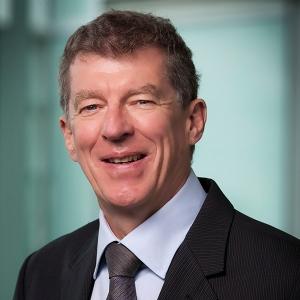
Lonrho had increased its stake in prefabricated buildings manufacturer Kwikbuild to just more than 70% and planned to increase its stake in agricultural processor Rollex SA, CEO Geoffrey White said last week.
 Kwikbuild has a major share of the South African market, and has businesses in Mozambique and Zambia, while Rollex is one of SA’s largest agriprocessing companies supplying fresh produce to local and overseas customers.
The investments, being funded by proceeds from a recent private placement that raised £25m, were part of a strategy to own majority stakes in the companies in which it is investing across Africa.
White said the private placement had given Lonrho, listed on London’s AIM market, enough cash to expand in the five areas of infrastructure, transport, hotels, agribusiness and support services in 17 countries, including SA.
Once a sprawling conglomerate which, at its peak in 1995, had about 90 companies, Lonrho has restructured, selling assets to pay debt and return cash to shareholders. It is now an investment holding group targeting selected markets in Africa, where White said there were sustainable returns for the patient investor.
“We have so far raised £25m, the bulk of which we intend to deploy to increase our stake in some of our businesses,” he said.
“Our intention is to have a majority stake of at least more than 51% in key businesses and that is the reason we have increased our shareholding in Kwikbuild from 62% to about 71%. We are also looking at increasing our shareholding in Rollex from 51% to a significant amount.”
Kwikbuild has benefited largely from government tenders in SA, where it has supplied prefabricated clinics and classrooms in rural areas. It plans to expand to countries such as Angola and Democratic Republic of Congo, as well as in east Africa.
Rollex is packing and delivering fresh produce and fish to local customers Pick n Pay and Woolworths and, in Europe, to Marks & Spencer, Tesco and Sainsbury’s.
The company, operated as a subsidiary of Lonrho Agriculture, has a large, chilled bonded warehouse at OR Tambo airport.
White said Rollex was growing its export markets. It had begun shipping fish from Namibia to the US and Europe, and had opened new markets in the Middle East and Scandinavia. “There is general demand for African fresh produce and we are sourcing our products not only from SA but elsewhere in Africa.”
There were plans to expand agriprocessing facilities in Angola, Malawi, Mali and Zimbabwe.
White said Lonrho was consolidating and expanding in Zimbabwe through LonZim. He said the country was recovering, and still had “a relatively highly educated labour force with an industrious working culture” as well as good infrastructure.
LonZim’s portfolio covers sectors such as aviation, hotels, IT and pharmaceuticals.
SA to be the racetrack of African kings
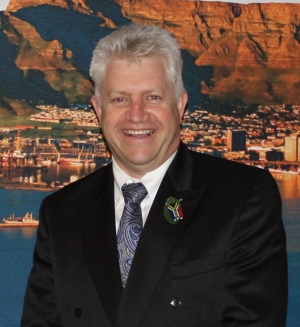
African countries could soon have their race horses galloping in Plettenberg Bay, that's if Africa Race Estate is allowed to develop a R1.3bn track, pavilion, a five-star hotel and village in the area.
SA Developer partners in Mauritius retail development

Atterbury Developments in partnership with credible and well established Mauritian holding company, ENL Property, has embarked on the task of developing the island’s first regional shopping centre - The Mall of Mauritius at Bagatelle
Cape Town Central City Chosen as Downtown of the Month by international organisation
The International Downtown Association’s (IDA’s) – the world leader and champion for vital and liveable city centres -chose The Central City as the Downtown of the Month
Building group sees prospects in SADC
Hardware Warehouse said it would this year continue to explore opportunities to diversify the group's revenue streams by selectively expanding the SADC.
Building materials retailer Hardware Warehouse yesterday said it would this year continue to explore opportunities to diversify the group's revenue streams by selectively expanding the Southern African Development Community region and, later, across other parts of Africa.

Broll SA Property Market Report 2008 - part 5 - Africa Overview
A synopsis of four African Markets
Expansion, acquisitions deal blow to SA French profit

ALTX-listed distributor of tower cranes SA French’s profit fell in the year to June, knocked down by costs of expansion and acquisitions of additional units to meet an upsurge in demand in the rental market.
 The costs were associated with new branches opened early this year in Cape Town and Durban as well as finance charges linked to the acquisition of additional units for the rental market.
Net profit fell to R6,9m compared with R12,7m in the previous year and headline earnings per share dropped to 4,68c from 10,12c. Revenue increased 25,7% to R152m from R121m while operating profit declined 36,8% to R12,9m.
The company’s gross profit margin decreased 2,7% from 25,2% to 22,5%, which it said was largely because of currency volatility.
CEO Quentin van Breda said the results were “satisfactory” despite “challenging” market conditions.
He the said opening of new branches and the acquisition of the new fleet was a capital intensive exercise that required a substantial investment on the company's part.
While developing infrastructure was costly and the initial costs were in most cases once off, management felt strongly that it was necessary to establish a national presence.
Van Breda said most of the expenses were budgeted for and SA French expected the investment to pay dividends in both the short and long term. “It is, however, undoubtedly the correct route to follow and as an emerging business model it will certainly generate substantial future cash flows,” he said.
“Despite challenging market conditions we have delivered satisfactory maiden results. We can now boast the biggest and most comprehensive tower crane rental fleet in Africa. The benefits and annuity income generated by a new fleet of tower cranes with an average lifespan of 20 years are undeniable.”
The company had to acquire new rental units after a spike in demand for crane rentals as a result of the uncertainty caused by the electricity shortages, the company said.
The electricity supply crisis earlier this year caused uncertainty for many of its key clients in the construction industry. This resulted in delays in the awarding of several infrastructure projects and construction companies responded by restricting or delaying capital expenditure decisions such as the purchase of tower cranes, it said.
“This change in market dynamic resulted in a change of focus in SA French’s business. The group has experienced an increase in demand for crane rentals as many of its clients were seeking to keep costs variable until there was certainty on power supply,” SA French said.
Esor thrives on building boom

Geotechnical engineering specialist Esor on Wednesday reported a threefold increase in revenue to R1bn for the year to February as it benefited from commercial and government infrastructure spend and a building upsurge in Angola and Mauritius.
CEO Bernie Krone said today’s buoyant construction market was the primary driver for the group’s organic growth.
“The Gautrain continues to be a major contributor. We have R400m worth of work for the high- speed train which will be world class, with 14 months’ worth of work,” Krone said.
Of the R420m worth of projects secured, R170m was completed during the year.
“The Gautrain … is stimulating major development within the radius of its stations’ use areas, which will dramatically alter the urban landscape and further boost the construction industry beyond 2010.” The many new developments in the pipeline included high-rise offices, hotels and retail and commercial building projects.
The group has completed piling projects for Airports Company SA at the new King Shaka and Cape Town International Airports and contracts for piling, pedestrian culvert jacking and lateral support at OR Tambo International Airport.
Work on stadiums for the 2010 World Cup has been completed at Athlone Stadium in Cape Town, Moses Mabhida Stadium in Durban and Port Elizabeth Stadium.
Profit came in at R116m from R34m a year before.
Headline earnings per share jumped 240% to R115m, equating to 51,3c per share while net asset value per share increased 46% from 109,8c per share to 160,3c.
The group declared a final dividend of 20c per share for the year for a total of R49,6m.
Krone said the group was entrenching its presence in Africa, building on subsidiary Franki’s foothold in oil-rich Angola. Contracts for piling, lateral support and marine works projects were completed during the year.
Stringent cost control kept operating margins steady despite the negative effect on the group of unusually abundant December rains.
“We did see a slight decrease in margins in the final quarter of the year since excessive rain in Gauteng slowed down projects before and after our year-end break.
“However, a stricter focus on operational efficiencies and aggressive investment in plant helped keep margins on a par with last year,” Krone said.
Esor invested R147,5m in new equipment during the year.
Krone said the current year would be an acquisitive one, but the group would look only at companies that made good business sense and in the geotechnical engineering sector.

eProperty News is a leading online commercial property marketplace serving the Southern African Investment, Office, Retail and Industrial property and allied sectors.