
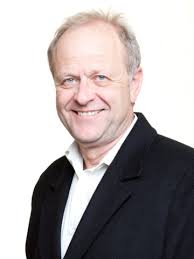
 Speaking at the Cape Town Press Club, Boraine said this issue could only be tackled at a metropolitan level. "Among other things there is a need for a single metropolitan transport authority with combined authority over roads - including bicycles, cars, buses and taxies - and rail including the associated subsidies."
Boraine, the former city manager who took over the partnership job three months ago, said that in the central city the Cape Town Station transportation interchange, which included trains, buses, taxies and long-distance buses,needed to be urgently upgraded.
The hallmark of "a great city" was the ability to move through it on foot in multiple directions "and to engage with the city on a human scale".
"The central city can achieve this, because of its relatively small size, through the gradual pedestrianisation of more streets and by making all streets more pedestrian and bicycle-friendly."
This should be carried out in tandem with encouraging 50% of the population that came to the CBD each day by car to limit vehicle use and turn to trains and taxis.
Noting the huge - and growing - divide between rich and poor Cape Town, he said that the attitude should not be to keep the poor out of the city but to encourage mixed use development, combining commercial, residential and street-level retail as the norm.
"We need an integrated public sector including parastatals, a management strategy (land and buildings) and a policy decision to make available relatively expensive inner city land for social housing and other social objectives such as schools, creches, sports facilities and cultural activities."
"This will be cheaper in the long run than the unsustainable national transport subsidy currently standing at four billion rand a year," he said.
Inner city regeneration should be based on the desirability of bringing people "of all income groups back into the downtown area especially as an alternative to continued low-density sprawl on the periphery of the city".
"The CBD of Cape Town is fortunate to have proximate residential communities such as Sea Point, Green Point, Bo Kaap, lower Gardens, Woodstock and Salt River. The District Six land restitution process is absolutely vital in strengthening the inner city residential component."
"The trend towards residential conversions (of large office blocks) in the CBD itself is a positive one, particularly because it will help sustain a more diverse retail base. At the same time we need to develop an approach that ensures that inner city residential development does not exclude the return of all income groups to the central city or lead to a new displacement through gentrification."
The Cape Town Partnership is a public private body promoting the central city of Cape Town by managing and promoting it as a leading centre for commercial, residential, cultural and entertainment activities. Part of its management strategy is to arrest degradation and retain and attract investment.
He noted that investors had invested R3 billion in the CBD in the first six months of 2003 and the CBD had held its position as a main contributor to the citywide annual business turnover - at 33%.
