 Portside Tower, the city's tallest building at 139 metres is expected to be completed in April next year, towering above all other skyscrapers.
Christiaan Barnard Hospital will move from the city centre to a site next door to the Cape Town International Convention Centre at the Foreshore, and the new 249 bed facility is expected to open its doors in 2016.
Cape Town's director of development facilitation Kendall Keveney said there were further plans to develop the city council and provincial-owned property with private investors including parts of Culembourg on the Foreshore, a section of District Six, and the provincial government-owned garage on Buitenkant Street.
“In District Six 5500 housing units will eventually go up when the project to redevelop the area is completed.
“At the Culembourg Quarter, 200 000m² of development is planned, and approval has already been given for 25 000m² which will include several high-rise buildings,” says Keveney.
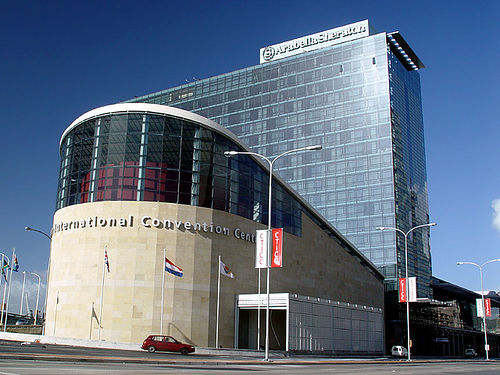 Western Cape public works MEC Robin Carlisle says the redevelopment of the Foreshore was required to boost the Western Cape's economy as the Cape Town city centre was the area where most businesses were located, and this would be essential for creating jobs.
His proposal that the freeways be demolished was influenced by other cities around the world, and the need to "reconnect" the Cape Town CBD with the sea.
"Land reclamation and the freeways have cut us off from the sea," said Carlisle.
He said doubling the size of the CTICC, which currently had revenues of over R400 million annually with a profit last year of R11 million, could create in the region of 36 000 jobs.
"Then we could bid to host big congresses like the Heart Congress which is the biggest conference in the world," said Carlisle.
Last year Transnet approved the construction of a passenger terminal for cruise ships, and this Carlisle said could further spur growth in tourism and related industries.
"We want to open up Heerengracht Street (by demolishing the freeways) so that it flows straight onto the passenger terminal," said Carlisle.
But he says demolishing the freeways, including the unfunished parts and relocating them underground, would cost money which would have to be provided by national government.
While mostly busineses would be located on Culembourg, Carlisle said high-density housing apartments would spring up between Roeland and Mill streets, on land which was currently owned by the provincial government and the site of a parking garage.
UCT's postgraduate architectural students have been roped in to give suggestions, as part of their coursework on the future of Cape Town's incomplete elevated freeway, which was abandoned in the 1970s due to funding shortfall.
Architect Neville Adler said creative ways had to be found to address the unfinished freeway.
“I'm not one for demolition and doing away with infrastructure, they should rather try and turn it into an opportunity,” said Adler.
He said there had been talks in planning circles to “mass up”, or “bulk up” the Foreshore with developments which were more friendly to pedestrians, and best use of open spaces which would invite people into the area.
“People should be put in the front and not the back of these plans, they should be able to walk there,” said Adler.
Cape Town Partnership CEO, Bulelwa Makalima-Ngewana, said new developments on the Foreshore would bring essential continuity between the CBD and the Waterfront.
“The introduction of ground-level retail, public space and a residential mix promises a human element in this part of town, and the proposed plans include a keen awareness of pedestrian and bike friendly access as well as links to public transport routes,” said Makalima-Ngewana.
She said the impact of expanding the CTICC would stretch beyond the Foreshore to the regional economy.
“As the CTICC continues to grow, so does its contribution to the economy directly through events, as well as indirectly through business and investment interest generated through events hosted successfully in Cape Town,” said Makalima-Ngewana.
The CTICC contributed to R2,55 billion to South Africa's GDP and R902 million to the Western Cape's economy, and last year it created over 7000 new jobs with 514 events it hosted.
Meanwhile the new 14-storey Christiaan Barnard Hospital, next to the CTICC, is expected to also provide 14 major operating theatres. The hospital's spokesman Michelle Norris said during a five-year planning process, “30 sites around the CBD were viewed and the one on the Foreshore was chosen because it was easily accessible by public transport”.
A request for proposals to develop the SANDF's Fort Wynward, which lies between the V&A Waterfront and the Cape Town Stadium, was abandoned last month after the Human Sciences Research Council sent out a public request to developers for a five-star hotel to go up on the site.
Local ratepayers voiced objections to any planned development on the historic site, which was used as a defence installation against invading ships during the Second World War.
Source: The Times