
 Acquisitions, disposals, developments, redevelopments, asset and property management, financial structuring and risk management. These are just some of the many aspects requiring intense attention when managing a large and diversified property fund such as Growthpoint which also happens to have a foreign unitholding of 13.7% for good measure.
Growthpoint Properties’ SA portfolio is indeed well diversified across retail, office and industrial property sectors. Sasse reports that all sectors are performing ahead of budget and the total SA portfolio vacancy level reduced by a full percentage during the period, to a healthy 4%.
Certainly it has bucked the trend as far as office vacancies are concerned but this has been at the expense of negative renewals i.e. lower contract rentals and in Growthpoint's case this was down by 4.4% as compared to a positve reversion of 5.9% at end 2010.
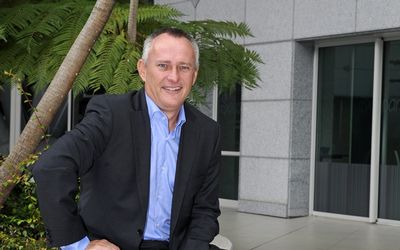
One of the biggest headaches is undoutedly at the operating level and more particularly the business of managing the rising tide of property expenses. CEO Norbert Sasse pulls no punches when lamenting on the significant increases in administered costs running well above inflation and contractual rental increases. "The impact of this on the overall cost of occupation and our cost to income ratio remains a major concern"
This has a triple negative effect on property owners, or the 'triple-whammy' as he puts it . “We pay more and get less. In addition, we’re forced to use our own funds to deliver these services ourselves, from providing refuse removal to electricity meters”.
Some tenant arrears can also contribute to forced write offs as occurs typically when municipal revaluations and/or where incorrect billings from council take place.
Fortunately there are aspects of the business that they can control and manage; one such area is financial structuring and debt raising: Growthpoint’s property assets continued to benefit from the strong support of its financial structures. In July 2011 Growthpoint successfully completed a R1,8 billion equity raising, which was used to repay R2,0 billion CMBS notes. During the period it also undertook two further bond issues totalling some R760 million, and three commercial paper issues totalling R900 million. The additional equity raised in July 2011, reduced the SA loan-to-value (LTV) ratio from 37.8% to 33.1%. A number of forward-starting interest rate swops concluded in prior years, became effective from 1 July 2011 and results in Growthpoint’s SA fixed debt increasing from 77.1% at June 2011 to 93.1%.
“Increased participation in the bond market diversifies our debt funding sources and levels of unsecured debt. The bond market is also providing cheaper funding than traditional funding in the current climate,” says Sasse. “Growthpoint continues to enjoy good access to liquidity, from both bond and bank markets.”
An ever-present reality that SA companies must consider is around empowerment: Growthpoint’s first BEE transaction was refinanced during the period and it received R306 million as partial repayment of the loan. AMU Trust, Growthpoint Properties Limited’s largest BEE shareholder, refinanced debt originally raised in 2005 and, by doing so, reduced Growthpoint’s mezzanine debt participation to R200 million. This remaining debt will be serviced by the AMU Trust semi-annually. The trust owns around 5.9% of Growthpoint Properties and represents the interests of Amabubesi Investments, Miganu Investment Holdings and Unipalm Investment Holdings.
Growthpoint Properties’ continued inclusion in the JSE’s Socially Responsible Investment Index (SRI Index), announced in December 2011, follows its positive environmental, social and economic sustainability practices and corporate governance. This is the third consecutive year of Growthpoint’s inclusion in the JSE SRI Index.
On the development front, with its SA retail and industrial portfolio’s almost fully let, Growthpoint has targeted increased developments to grow its portfolio. “Acquisition, development and redevelopment projects approved and underway currently total some R1,4 billion,” reports Sasse. “Growthpoint has also picked up a few strategic land parcels, including a prime site opposite the Rosebank Gautrain Station.”
Despite there being a reasonably bullish outlook regarding the industrial market - large warehousing and distribution faclities in particular - as well as an industrial portfolio vacancy sitting at under 3% with positve reversions and increasing lease periods, Growthpoint has only one industrial development commitment and no recent industrial acquisitions.
Sasse's bullishness regarding developments is explained by an opinion that besides growth opportunities, developments offer yields of up to 2% higher than acquisitions of completed properties that are fully tenanted. “Development risks are mitigated and, in the current market, we are confident that this is an effective strategy for portfolio and distribution growth”.
