 Although the largest listed property group, Growthpoint Properties, managed to see its distribution growth rise 7,6% to 114,6c for the year ended June, this was slower than in previous years because of tough trading conditions.
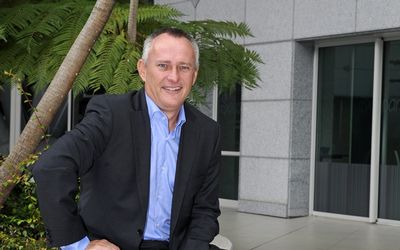
Growthpoint CEO Norbert Sasse said yesterday the economic recession was starting to become evident in the number of listed property companies that had so far released results with single digit-increases in distribution income.
Even though Growthpoint expected distributions for the coming year to continue showing positive growth, it warned that this would be somewhat subdued “provided that no major unforeseen events occur”.
The slowdown in economic growth had resulted in a slowdown in demand for new space, Sasse said. Although the group’s core assets continued to perform “positively” in the economic down-cycle, it was new office and industrial developments, which had come on stream over the past nine months, that had proven slow to let.
The group’s vacancy levels rose to 5,4% from 2,9% previously, with newly acquired developments accounting for 1,2% of the increase.
But the good news for the group was that occupancies for its retail portfolio had remained stable.
However, vacancies in the office portfolio almost doubled from 4,9% to 8,9%, while those in the industrial portfolio more than doubled to 4,4% from 2,1%.
But Sasse put a positive spin on the increase in vacancies, saying “these vacancies position Growthpoint at an advantage, (allowing it) to benefit from future growth”.
The group declared a distribution of 114,6c per linked unit compared to the 106,5c in the prior year.
Growthpoint would pay the distribution of 58,3c per unit to its unitholders on September 21 and had offered unitholders a distribution reinvestment alternative whereby unitholders could elect to receive new Growthpoint units to the value of their distributions.
Revenue rose 18,4% to R3,43bn, boosted by acquisitions made during the year for its industrial and office businesses.
The group’s net property income grew R413m as a result of rental escalations and new acquisitions.
Its cost: income ratio decreased from 24,9% in the prior year to 23,6% at the end of June. But finance costs jumped 32,1% to R921m from R697m, of which R174m was due to higher average loan balances used to fund the group’s substantial pipeline of developments and acquisitions, the group said.
The increase in finance costs was expected to reflect in higher margins on the refinancing of debt for the group during the next year.
“However, this will be mitigated wherever possible by seeking new sources of finance in the short-term markets, where prudent,” Sasse said.
During the year, Growthpoint had bought a number of office and industrial properties valued at R395,3m in total, while it had invested R1,5bn in new developments and extensions to existing properties, he said.
Five noncore properties and 44 residential units at Montclare were sold for R183,8m, and sale agreements had been entered into over a further six properties for a combined R573,7m.
