
Afrimat sees improvement in construction

Afrimat said that despite a slower trade performance in the year to February 2009, improvement is already evident in the months since year-end.
A firm foundation
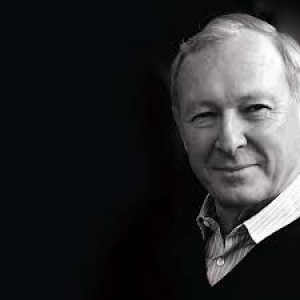
Stephen Pell has his job cut out. The head of Stefanutti Stocks building unit is at the centre of the majority of the activity around the recent corporate merger.
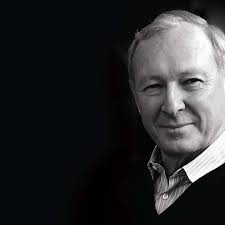 A large part of the R1,1bn merger between the construction groups Stefanutti & Bressan and Stocks is taking place in Pell’s unit. That is because Stocks was largely a building business with a small civil engineering operation. So the essence of the 2008 merger that created the R6,3bn Stefanutti Stocks is being experienced in the building business unit.
Pell entered Stefanutti Stocks from the former Stocks, whose building operations had spread across the Southern African region and the Middle East. Pell says the merger was attractive because it provided good synergistic operational and cultural blends. He says the old Stefanutti & Bressan had its roots and a strong building base in KwaZulu Natal, whereas the former Stocks was stronger in other regions. The combined operation has produced a geographically diversified and strong entity, he says.
The new building unit spans a number of sectors that include the residential and commercial markets. The unit recently concluded work on the prestigious One&Only, the luxurious new Cape Town hotel undertaken by hospitality mogul Sol Kerzner. The group was also in the joint venture that won the R1,4bn expansion of the Cape Town International Airport and the R500m extension at the OR Tambo International Airport.
The unit also contains a focused housing operation, which operates mainly in the affordable housing sector. A large portion of the housing development work is from mining and industrial linked developments, as well as some private developers. This operation does, however, have the ability to operate in the low-cost RDP arena.
The building market is going through a lull due to the global economic meltdown, but Pell is confident that his division is well positioned. He says the merger has retained the entrepreneurial vibe, backed by a bigger operation. “Size does matter,” says Pell. “We are beginning to see the benefit by being recognised more often in larger projects.” Stefanutti Stocks’ building unit is probably within the top four in terms of size in the Southern African region, he says.
Pell says the group has successfully dealt with integration issues and more specifically the people factor. “This was important to us as it speaks to the strategic objective of the company. We want to be the best in our market by delivering quality service, on time. The only way we can achieve this is to ensure that all our people exude enthusiasm and proactiveness towards all our clients and customers because that will be our critical differentiating factor.”
Though the local building market has gone quieter, Pell sees growth opportunities, which can be derived through offering clients extra value. He says in such a tight market, Stefanutti Stocks’ black economic empowerment (BEE) credentials will add to the competitive edge. Stefanutti Stocks boasts the best empowerment credentials in the construction sector of the JSE. It was recognised as a leading BEE player in the FM’s 2009 Top Empowerment Companies survey.
Pell also sees opportunities for growth in the Middle East, where his unit maintains a fair amount of exposure. “When we talk about the Middle East people focus on Dubai,” says Pell. The region is bigger than Dubai and offers opportunities in places like Abu Dhabi, Bahrain and Qatar, he says. “Our Middle East operations include interior fit-out and refurbishment business Al Tayer Stocks and the electromechanical business Zener Steward. We have also recently announced that we intend to start up a general construction operation focused on the infrastructure market in the Middle East, which will be an area of growth to us in the long term.”
Pell also expects work to flow in from the broader Southern African region. The group has satellite offices in Swaziland, Botswana, Zambia and Mozambique.
He says that though building margins remain tight, the group is expecting an increase in business. He says the order book is geared to remain solid into 2010 and beyond. The unit will rely on its geographical diversification to navigate the market.
The building unit derived 20% of its total 2009 financial year revenue of R2,7bn from foreign operations. This is projected to reach the 35% mark in the near future. The backing of an enlarged group also promises synergistic opportunities.
Property booms on Wild Coast despite slump

Demand outweighs supply when it comes to real estate in the Eastern Cape region and investors are queuing up to lay their hands on prime riverfront and seaside homes.
Standard lends Hyprop R500m

Standard Bank has affirmed its confidence in listed property group Hyprop Investments by granting the firm R500m debt that Hyprop plans to invest in completing various upgrades on Canal Walk in Cape Town and Hyde Park Shopping and The Glen Shopping Centre in Johannesburg throughout the year.
Trafalgar Rental Index points to uncertain market
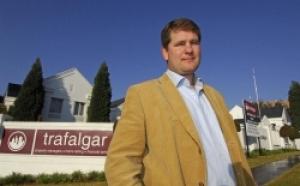
Despite softer residential rental demand appearing in 2008, the Trafalgar index rose by nearly 13% from January to December
Metrorail on track for World Cup
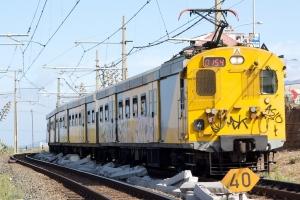
Durban's new R140m railway station for the 2010 World Cup will be completed by September 2009, Metrorail said.
Emira places faith in fundamentals

Emira Property Fund had an active six months bringing 14 projects totalling R330m to fruition. These investments are expected to significantly improve the quality of the portfolio and the sustainability of its rental income over the longer term
Taking Stocks for future

One of the top three or four construction companies in SA within the next few years — that’s the target status for Stefanutti & Bressan (S&B), as a sequel to its impending R1,1bn acquisition of unlisted Stocks Limited. Competition commission approval is expected by the end of July.
 S&B has a market capitalisation of R2,4bn. When it listed in August last year the issue was 21 times oversubscribed. After going in at R12/share, S&B has traded as high as R27 but dropped in recent months to around R15,50.
In a joint statement the companies said the merger would position the enlarged group “as a major competitor in the first-tier construction sector, with almost R5bn turnover and 8 000 employees”, and it is not seen as a cost cutting exercise.
Stocks Building Africa was launched in 2001, after the old Stocks & Stocks was taken off the exchange as a consequence of some tough times. Management bought out what was left.
S&B CEO Willie Meyburgh says S&B heard that Stocks was interested in listing again, and that S&B had convinced the company that throwing in its bulk with S&B was the smarter move.
The industry in SA is dominated by a few large companies in terms of capacity. At the top are Murray & Roberts and Aveng subsidiary Grinaker-LTA; in the second tier are Group Five and Wilson Bayly Holmes (WBHO); and the smallest of the traditional big five is Basil Read.
There is not much competition in the top two tiers, and this allows these contractors a lot of leeway when it comes to negotiating price.
“We would like to be in the same league as the Group Fives and WBHOs, and in time get to the level of M&R and Grinaker,” says Meyburgh.
“We need to upscale to be able to take on the larger projects on our own, so that we can keep more of the margin for ourselves. It will also raise the profile of the company.
“Our competitors know the name Stefanutti & Bressan, but investors and the public in general don’t really know the company or the quality of the company.”
Before embarking on this deal, S&B had wanted to diversify itself geographically. “We said we wanted to get into first-class emerging markets such as Dubai or Abu Dhabi,” says Meyburgh.
The transaction entails a swap of about 40m shares, while Rand Merchant Bank — a substantial shareholder in the unlisted Stocks — will be paid R382m by S&B for its stake.
S&B already has a strong offering. The group is well established in civils (concrete structures such as bridges) and construction. It is also exposed to mining, which is expected to continue investing in new capacity. S&B builds and maintains slimes and tailings dams, and is involved in contract mining for open pit mines.
The group also has well-established building divisions in the Western Cape and Gauteng, with a smaller presence in KwaZulu Natal — where Stocks has a strong presence.
The deal may have come at a good time for Stocks, as a slowdown in building is expected after consecutive interest rate rises.
It will be up to the Stocks team to take advantage of the Gulf area, where petrodollar-funded building activity appears to be isolated from global economic pressures. Stocks has a handful of small joint ventures operating in three of the Arab emirates, which S&B are hoping to be able to leverage off into larger contracts.
Perhaps the biggest and most valuable gain for S&B is an experienced team of managers with a strong entrepreneurial flair. Gino Stefanutti, S&B’s founder and chairman, says: “People have asked us, ‘Why are you buying a building company?’ but we say that this is mainly a construction company. For example, if you look at the work they have done at Cape Town airport, the parking lot — it’s a civil's job. These people can be returned to civil's any time,” says Stefanutti.
“The beauty about Stocks is that they are owner-managed. They were all part of the leveraged management buyout — they are just like us. We get on well. Like us they are contractors and not professional managers.”
With more bodies on board, S&B will be able to staff the stream of larger projects that it expects to win tenders on. Government has committed itself to spending about R515bn over the next three to five years, with more work likely to follow.
Meyburgh says the group has a vision of reaching turnover of R10bn within the next three years. A double-digit operating margin is also being pursued.
Though the Stocks acquisition will dilute operating margins slightly (7,2% in financial 2008), it will be earnings-enhancing. The value of the merger will only really make itself felt in February next year. At that point there will have been at least seven months of Stocks trading in the numbers.
On a forward p:e of 12 for S&B, it seems the market is missing out on yet another trick. Meyburgh says the company is going to perform better than its forward p:e would lead one to believe, emphasising that at these levels there is a lot of value to be had.
SA cement sales up

The 2010 Soccer World Cup stadia, some new dams and the Gautrain project should add to cement demand in the current year
Moving and shaking

Super-bullish conditions in infrastructure are supporting consolidation and organic growth in the sector, and it seems there are still attractive returns to be had.
 Roads & civils specialist Raubex, which listed in March this year, has made its largest move to date, gobbling up peer company B&E in a R514 million deal that will allow the company to bulk up capacity.
Aneshrin Pillay, an analyst with Afri-focus Securities, says the deal is substantial: "It's in line with their strategy to enhance their materials business and it looks to be earnings-enhancing and margin-enhancing."
B&E will slot in nicely with Raubex's aggregates and crushing operation, Raumix. The market appears to like the deal, with the share moving at least 4% on the announcement.
However, says Pillay, a deal this size does eat into the company's cash resources, and this is compounded by the fact that it has already shelled out about R160 million on capital equipment.
The transaction will be funded through a combination of shares and cash, which will see B&E receive about 9m shares (worth about R295m) and R218m in cash.
Rowan Goeller, an analyst with Macquarie First South Securities, says the transaction grows the company's fleet and skills base, and will allow it to take on more work, since one of Raubex's strengths is to "move their plant around and do crushing work for the other contracts they have".
Goeller says B&E is being bought at a historic price:earnings ratio of about 10, based on the past six months' financial performance.
According to I-Net Bridge, Raubex is trading at almost three times the p:e of B&E. The only concern raised over the deal is the dilution to shareholders, but if the deal delivers more profitable growth, shareholders aren't likely to notice.
Another company that has been moving to strengthen its market position is construction company Sanyati. It continues to expand beyond its roots in KwaZulu Natal, and with its R220 million acquisition of the Meyker Group it is now active in seven of the nine provinces.
In the six months to end-August, Sanyati acquired construction and civils companies Ruthcon and GEM. Before that it bought Hibiscus Asphalt and Mega Pile.
The group will be paying for the Meyker transaction in tranches over the next four years. The transaction is being funded through cash and shares (about 44 million will be issued).
Sanyati CEO Rick Jackson says it's likely the group will make one more large transaction so as to meet its 2012 revenue target of R2,7 billion.
Another company making moves is Protech Khuthele, which this week announced the acquisition of two ready-mix operations for R79 million.
Protech is primarily a fast-track bulk earthworks company, but chief financial officer Nellis Wolmarans says it also does some civils work.
This requires a fair amount of concrete and readymix, which the company has had to rely on suppliers for.
"In the past we have called readymix suppliers and they don't arrive the next day or the day after. Even if we place huge orders we can end up waiting for weeks, which holds us up," says Wolmarans.
He says Protech has in the past moved to make itself more efficient by diversifying its business. "We started our geotechnical laboratory for the same reason, because the labs we were using weren't keeping pace with us."
The company will also be able to diversify the service offering on contracts, as it will now have the plant and skills to take on more civils work, such as culverts and drains.
Protech CEO Gerald Chapman says the six plants the business is acquiring will boost earnings, which "should be handsomely compounded in the months and years ahead, given especially the construction industry's rapid growth".
In related news, M&R said shareholders could look forward to earnings per share that would be between 40% and 50% higher for the six months to end-December and the year to end-June 2008, than in the previous comparable periods.
Proceeds from disposals of noncore assets are likely to lift these respective performances by as much as 110%.
M&R also said it had secured a seven-year, R7 billion contract for Eskom's first new coal-fired power station, Medupi, involving steel fabrication, erection and mechanical installation.
Goeller says it is likely that construction companies will continue to deliver outstanding performances "for a while yet", as government's spending was only beginning to have an impact now.
He also says all the indications are that the private sector is starting to make available the infrastructure spending that had previously been put on hold.

eProperty News is a leading online commercial property marketplace serving the Southern African Investment, Office, Retail and Industrial property and allied sectors.